Showing posts with label Mexico. Show all posts

Tuesday, 8 May 2012

Region Focus: Veracruz

Country: Mexico


Brief Overview:
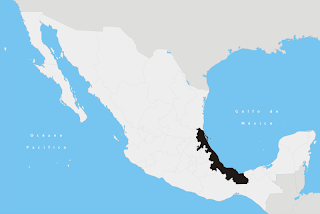
Verazruz is a region in Eastern Mexico. It was this region that the Spaniards first arrived before their Mexican conquest around 500 years ago. What makes this region unique, is the fact that it was a crossroad for many different cultures that are not the most common in the rest of Mexico (or at least most of it). Most of us will imagine the standard Mexican culture as a blend of Spanish and Native Indian (Maya, Aztec, Toltec or Olmec) culture. However in Veracruz, besides the usual Spanish and Native Indian culture, there is also a strong African and Afro-Caribbean presence. Partly because Veracruz was an entry port for slaves entering from Africa and the Afro-Caribbean. There has also been a huge amount of European migration into Veracruz since colonial times. Up till now, Veracruz still has pockets of immigrant communities from Spain, Italy and even Lebanon. This can be seen not just in the food of Veracruz but the religion too. As with the rest of Mexico, Veracruz has a Roman Catholic majority. However, there are also a significant amount of Protestants and Jews.


Cuisine:
Before the Spanish conquest of Mexico, the typical Veracruz diet will consist of the of corn, beans and squash. The cuisine was also rich in a variety of tropical fruits, vanilla beans and a herb called hoja santa/mexican pepperleaf (piper auritum) which is rich in safrole (think of root beer or sarsi in terms of taste). Due to the fact that it is next to the coast, there was also an abundant amount of seafood consumed. In addition, chilis, tomatoes, avocados, papaya, mamey and zapote were cultivated.

During the colonial era in Veracruz, many old world (mostly European and sometimes Asian or African) ingredients and spices were introduced. Mexico was somewhat influenced by the old world. But the influence was more prominent in Veracruz and many herbs, spices and ingredients in its cuisine today are almost absent in 'standard' Mexican cooking. Here are some examples of what was introduced to Veracruz during the colonial period.

European Influences:
  • Parsley
  • Saffron
  • Thyme
  • Marjoram
  • Bay Leaves
  • Coriander
  • Wheat
  • Rice
  • Almonds
  • Olives
  • Olive Oil
  • Garlic
  • Capers
Asian Influences (via Spain):
  • Cloves
  • Black Pepper
  • Cinnamon
African and Afro-Caribbean Influences (via Portugal & Brazil):
  • Plantains
  • Yucca
  • Sweet potatoes
  • Sugar cane
  • Pineapple
  • Peanuts
Notable And Common Dishes In Veracruz:
  • Caldo de Mariscos (seafood soup)
  • Arroz a la Tumbada (rice cooked with seafood and/or sometimes meat)
  • Huachinango a la Veracruzana (red snapper served in a spicy tomato salsa)
  • Frijoles en Achuchutl (black beans with pork rind, chayotes, squash seeds and jalapeños)
  • Bocoles (a kind of tortilla made with corn dough. It is stuffed with black beans, chorizo, eggs or seafood and fried in lard)
  • Tamales in Banana Leaf
  • Anise Bread Rolls
  • Camarones a La Diabla (prawns in spicy sauce)
  • Chilpachole de Jaiba (spicy crab soup/thin stew)
  • Huevos Tirados (fried eggs cooked with beans and served with cheese, totopos, tortillas, fried plantain, and arroz a la tumbada)
  • Adobo Huasteco (pork in spicy sauce)
  • Picadas (thick tortilla with assorted toppings)
  • Carne de Chango (popularly called monkey meat. It is actually pork)


Saturday, 5 May 2012

Ceviche: Mexico vs Peru

VS

Ceviche is a latin american dish that consists of chopped vegetables and cubes of raw seafood (mostly fish) that has been marinated and 'cooked' for a few hours in the acids of citrus juice. The origin of this dish is disputed but most believe that it originated in Peru during the Spanish colonial period. Lima, the present day capital of Peru was the capital of a region called the Viceroyalty Of Peru. Which consists of most of the present day countries in South America. Which is why Ceviche was introduced to many other latin american countries. All which added their own regional touch to this dish. Ceviche's fame and popularity was so great that it eventually made its way to the Caribbean and Mexico (which were not part of the Viceroyalty).

If we ever find Ceviche in Singapore, it is usually the Mexican version. The typical Ceviche found here are those usually served in small bowls or cocktail cups and eaten with doritos or tostitos. And the ingredients are all too familiar. Cubes of raw fish mixed with diced avocado, tomatoes, coriander, onions, salt and chili marinated in a base of lime or lemon juice and oil. Mexican Ceviche also uses raw prawns, octopus or squid to replace the fish or as an extra addition sometimes. Although this version is not very common (if availabe at all) in Singapore. Mexican Ceviche is seen as one with lots of character and one that uses more readily available items such as tuna and mackerel.


Peruvian Ceviche on the other hard, is viewed by many as being very distinct. It has many regional variations. But the standard form consists of chunks of raw fish 'cooked' in the juice of either lime or bitter orange and mixed with onions, chilis, salt and pepper. What makes Peruvian Ceviche different from the usual Mexican version is the way that it is served. It is not eaten with tostadas as most people are used to. Instead, the mixture is served with cooked corn-on-the-cob and sweet potatoes. In certain regions of Peru, people also eat Ceviche with toasted corn and even seaweed. The standard traditional fish for Peruvian Ceviche is sea bass. In some areas, shark and sole are also commonly used. Due to a large influx of Japanese immigrants in Peru during the 19th century, Peru also has Ceviches which are made in a more 'sashimi' way. Which means marinating the fish in the citric acid of choice only for a short period of time. And then serving it promptly so that it is 'cooked' on the outside but still raw inside (think of it as tataki cubes).


We recommend using sashimi-grade fish for Ceviche as it is ultimately still a raw dish. Sashimi-grade fish is expensive in Singapore. But Fassler's Gourmet at Woodlands sells excellent vaccum packed sashimi-grade fish that can be stored in the freezer for long periods of time. After a quick thaw, it can be used to whip up a delicious Ceviche anytime. Do check out http://www.fassler.sg/ . We were absolutely floored when we made a little trip to Fassler's a few months ago.

Tuesday, 7 February 2012

Food Focus: Mexican-Style Albondigas

Country Of Origin: Mexico (duuh. lol)

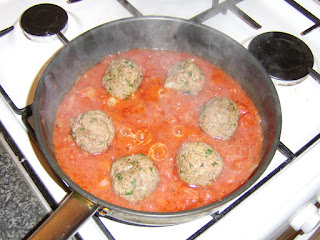
Albondigas basically means meatballs in Spanish. And they were introduced to latin america during the Spanish conquest. Naturally, there are many different Albondigas from Mexico to Colombia, and from Venezuela to Argentina. There are 2 popular Mexican versions of this dish. One in soup and one in tomato sauce. We will only post the recipe for the one in tomato sauce as we have not experimented with the one in soup yet.


Mexican-Style Albondigas

Ingredients For Meatballs:
- 500g frozen minced beef, thawed
- 500g frozen minced pork, thawed
- 1 1/2 cups plain breadcrumbs (the western, not japanese one)
- 2 eggs, beaten
- 1 teaspoon salt
- 2 teaspoons finely ground black pepper
- 3 cloves garlic, finely chopped

Ingredients For Sauce:
- 2 cans plain, canned tomatoes in juice (about 423g each)
- 1/2 cup pickled jalapeño peppers, drained
- 2 large white onions, finely chopped
- 5 cloves garlic, finely chopped
- 2 tablespoons vegetable oil plus extra for greasing
- 2 teaspoons cumin powder
- 2 cups hot water mixed with 2 tablespoons chicken stock powder (Knorr is the preferred brand)
- salt and black pepper to taste

Preheat the oven to its maximum. Line a baking tray with aluminium foil and lightly grease it with vegetable oil. In a large bowl, mix all the ingredients for the meatballs until mixture is well combined. Roll about 1 tablespoon worth of mixture into a ball and place onto baking tray. Continue with this process untill all the mixture has been used up. Make sure the meatballs are spaced well apart. Reduce heat to 180 deg celcius on 'top heat' mode and place meatballs in oven. Allow to grill for about 30 to 40 minutes or until the meatballs are cooked through and brown at the top. Meanwhile, pulse the canned tomatoes and jalapeños in a blender or food processor until well-blended. In a large, deep-dished pan, fry the onions and garlic in the vegetable oil under medium-low heat until onions are soft. Take care not to burn the garlic. Add cumin powder and fry for another few minutes until fragrant. Add the tomato mixture and water mixed with stock powder. Bring to the boil and mix well. Remove from heat, sample the sauce and add salt and pepper to taste. Set aside. When meatballs are cooked, remove from oven and transfer to a plate. Pour away all the liquid that has been 'excreted' onto the baking dish. Add meatballs slowly to the saucepan, taking care not to break them and bring back to the boil again, basting the meatballs in the sauce. Remove from heat and serve.

Wednesday, 1 February 2012

Food Focus: Salsa Verde & Salsa Roja

Country Of Origin: Mexico


Salsa Verde (green salsa) and Salsa Roja (red salsa) are the 2 most common types of commercial salsas found outside Mexico. They are extremely versatile and can be eaten with many types of food such as tacos, nachos, burritos and fajitas. However, they can be rather pricey when bought from stores, especially when one likes to consume them in large quantities. Frankly, it is not extremely difficult to make at home. And it is much cheaper. Which is why we are providing you with these tried and tested recipes.

Salsa Roja (red salsa)

 Ingredients:
- 7 tomatoes, insides scooped out into a separate bowl (for the green salsa), roughly chopped
- 1 big white onion, roughly chopped
- 5 cloves garlic, roughly chopped
- 1 small tin tomato paste (like Hunt's or Contadina)
- 2 tbsp vegetable oil
- 4 local green chillies, sliced (use the seeds too)
- 1 cup water
- 1 teaspoon salt

Heat the oil in a non-stick, deep dish pan. Add in the tomato paste, onions, garlic and chillies. Fry under medium heat until tomato paste starts to change to a darker colour. Add in the chopped tomatoes and fry under high heat until tomatoes soften. Add in the water and bring to a boil. Mix well and cover the mixture. Lower down to low-medium heat and allow to simmer for 10-15 minutes. Stirring every now and then to prevent any burning. Remove the lid and off the heat. Allow the mixture to cool, stirring constantly. Ladle the mixture into a blender and pulse under its lowest setting until the sauce turns smooth (about 2 mins). Pour into a clean glass jar and allow to cool before refrigerating it. Keeps well for a week to a week and a half.

Salsa Verde (green salsa)

Salsa Verde is usually a challenge to make at home as it is quite difficult to find tomatillos (the original fruit used for green salsa) and green tomatoes (the first choice subsitute) in Singapore. So we have devised a recipe that produces a salsa that matches the taste and texture of the original Salsa Verde.

Ingredients:
- 5 green bell peppers (capsicums), seeds removed and roughly chopped
- 1 big white onion, roughly chopped
- 5 cloves garlic, roughly chopped
- 1 bunch parsley (about 50g), roughly chopped
- the insides of the 7 tomatoes used in Salsa Roja
- 1 cup white vinegar
- 1 teaspoon salt

Heat the oil in a non-stick, deep dish pan. Add onions and garlic to the pan and fry until onions turn soft. Add the peppers, parsley and tomato insides. Fry on high heat until peppers turn soft. Add the vinegar and bring to a boil. Mix well and cover the mixture. Lower down to low-medium heat and allow to simmer for 10-15 minutes. Stirring every now and then to prevent any burning. Remove the lid and off the heat. Allow the mixture to cool, stirring constantly. Ladle the mixture into a blender and pulse under its lowest setting until the sauce turns smooth (about 2 mins). Pour into a clean glass jar and allow to cool before refrigerating it. Keeps well for a week to a week and a half.

Tuesday, 31 January 2012

Restaurant Review: Casa Latina

Where: 42 Waterloo Street
Cuisine: Mexican
Website: http://www.casalatina.com.sg/
Rating For The Meal: 7.5/10

Here it is, our first restaurant review. Many people, expats and locals alike have told us about a snug and authentic Mexican restaurant at Waterloo Street. Since this blog is now dedicated to latin american cuisine, we decided to check this place out. We arrived at a quaint colonial style bungalow which has been transformed into a restaurant on the first floor. We chose the outdoor dining area which looked like what used to be a courtyard and settled down quickly for a meal.


We started off with 2 frozen margharitas. Strawberry and peach. They were refreshing although not frozen enough. What made it special was the fact that it was neither too sweet nor fruity and had a good kick of tequila. However, we felt that a bit more fruitiness would be better.


We then shared 2 starters. A plate of tamales, half which was stuffed with shredded pork and half with chillies and cheese. And a special dish called Casa Latina Melted Cheese which was a sizzling stone pot of soft white cheese and salsa verde topped with chopped herbs. Eaten with flour tortillas, they tasted great. A little on the salty side but it was a good mix and delightfully chewy. The flour tortillas were so tasty that they can be eaten plain. It tasted a little like naan but compressed into the same texture as chappati. The tamales tasted alright. Nothing special about them. They were kind of dry too.


Main course was Mexican-style Milanese with guacamole. A breadcrumbed and deep fried flattened beef steak served with chunky guacamole, a small and insignificant side salad of shredded iceberg lettuce and diced tomatoes, as well as thick cut soft fries tossed with fried onions and fresh herbs. It was an extremely fresh take but nothing amazing in terms of taste. The milanese paired well with the guacamole. And the fries tasted great on its own. Pretty much standard. We tried to innovate the dish a little by cutting the steak into bite sized portions, piling each of them with guacamole and adding a squeeze of lime juice. It tasted amazing then, so much so that we had to order another bowl of guacamole. Which was a whooping $6. The other main course was a recommendation. Pork Carnitas with corn tortillas, salsa fresca and another sauce which was either salsa ranchera or salsa negra. The salsa fresca was not crisp and quite sour. The other salsa was biting hot and a little bitter. The carnitas were dry and not exactly tasty and the corn tortillas smelled like feet. However, they tasted amazing when mixed together and rolled up like a popiah. The tortilla was a bit small for proper rolling though, so we had to roll it burrito-style instead.


The dessert seemed to be the highlight for the night. Tres Leches Cake which is a special cake found in many latin american countries. It is called Three Milk Cake in English as the cake usually comprises of 3 types of milk. Fresh, condensed and evaporated. The version at Casa Latina was a buttery cake made from cornmeal flour and soaked in all 3 types of milk. It was a generous square of cake oozing with cold milk and topped with sweet cream and thinly sliced strawberries. The cream tasted rich but it came from a canister. Although we did not ask, we suspect that it was from the French brand 'President'.


In conclusion, our view for the night is that Casa Latina has a great menu range (it is available in their website) with an amazing selection. A lot of time and effort was used to piece together their menu items. They also have good service and a decent ambience. However, their food quality was only so-so. Nothing special or particular in terms of taste. The entire meal with GST included was about $145 for 3 people. From our point of view, that was quite a reasonable pricing. Considering the fact that we also had 2 alcoholic drinks.