Country Of Origin: The name says it....Colombia
It is unfortunate that we do not have any well-known colombian restaurants in Singapore. Our interest and exposure to colombian food started when a colombian-american friend cooked dinner for us a few years ago. He cooked a stew called Sancocho and served it with rice, chopped parsley and diced avocado. It blew our minds and unfortunately his wallet too. Due to the fact that the bought everything from Cold Storage....the cost of the ingredients came up to a whooping $300.
And so it grew, our interest (or at least for some of us) in colombian food. We were cooking for some friends one night and thought of having a little something with white rice. That was when we decided to have a few simple colombian dishes that will serve well with it. And among these dishes, Carne Desmechada was one of them.
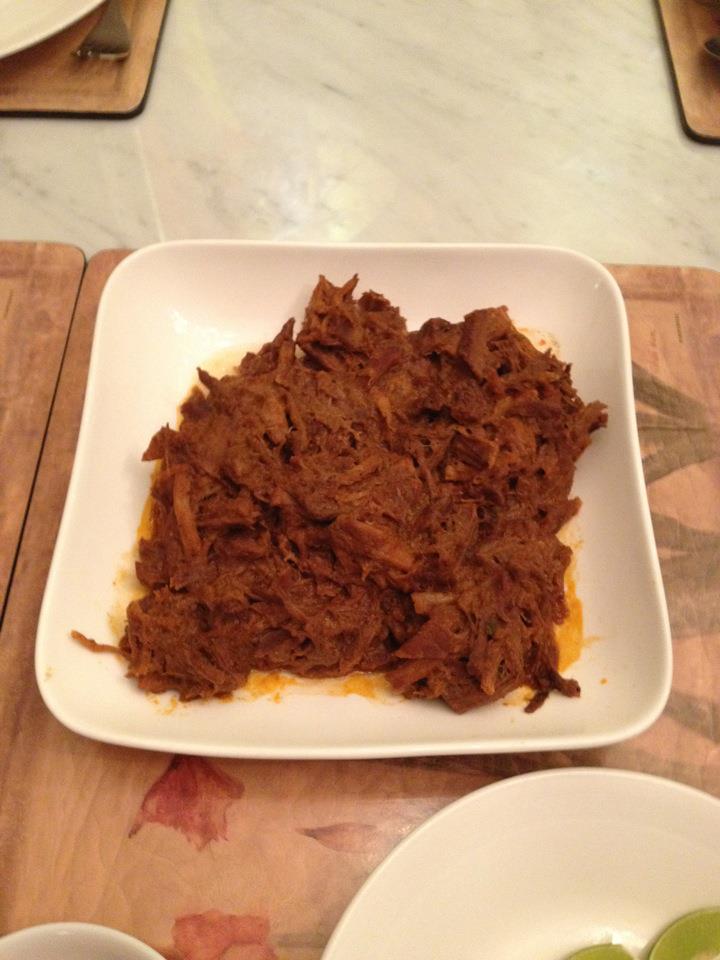
Carne Desmechada
Ingredients:
-1kg frozen beef stew cubes, thawed
-2 red peppers (capsicums), roughly chopped
-around 10 sprigs of spring onions, roughly sliced
-5 cloves garlic
-1 teaspoon cumin
-5 tablespoons vegetable oil
-3 beef stock cubes dissolved in 1 cup hot water (Knorr is the preferred brand)
-2 teaspoons black pepper
-extra salt (if needed) to taste
Place the beef cubes in a large pot and pour enough boiling water to cover. Bring to the boil and allow to simmer for 2 to 3 hours. Or until beef cubes can be easily pierced with a fork. Remove from heat and drain. Shred the beef with 2 forks and set aside. In a deep-dished non stick pan, fry the red peppers, spring onions and garlic with the vegetable oil on medium to low heat until the mixture turns soft and garlic turns golden. Take care not to burn the garlic. Remove from heat, transfer to a bowl and stir in the cumin and black pepper. Give the pan a good wipe. Allow the mixture to cool before pulsing or blending it in a food processor or blender. Remember to keep blending until the mixture becomes a smooth paste. Transfer the spice paste, shredded beef and hot beef stock back into the pan and fry over high heat for about 5 to 7 minutes until the mixture has dried up a little. But not too dry as the beef should look like it has been mixed with a bit of gravy. Remove from heat and serve.
Showing posts with label Food Focus. Show all posts
Thursday, 3 May 2012
Monday, 30 April 2012
Food Focus: Caruru de Camarão
Country Of Origin: Brazil
Caruru de Camarão is an okra (ladyfinger) and prawn stew that is commonly eaten as a condiment in the state of Bahia. Which is in north-east Brazil. Caruru de Camarão can be eaten most deliciously with plain white rice. However, the most popular way of eating it is to consume it with Acarajé, which is fritter made from mashed black-eyed peas.
We made Caruru de Camarão once for a Brazilian-themed birthday dinner. It was a simple dish with a strong seafood taste. Some of the original ingredients like manioc (tapioca meal) cannot be easily found in Singapore. Therefore we chose to use breadcrumbs to create a dish of similar consistency.
Caruru de Camarão is usually thickened with either manioc meal or roasted peanuts (or both). It is a matter of personal taste, and also which part of Brazil you are in. We chose to thicken our stew solely with breadcrumbs as it is way faster than having to roast and crush peanuts.
Caruru de Camarão
Ingredients:
-750g to 1kg frozen raw prawns (shrimps), defrosted
-750g to 1kg okra (ladyfinger)
-4 cups hot water mixed with 4 fish or ikan bilis stock cubes (Knorr is the preferred brand)
-2 large onions, finely chopped
-5 cloves garlic, finely chopped
-5 tablespoons vegetable oil
-4 tablespoons plain breadcrumbs
-salt and black pepper to taste
Cut the okra into thick slices and cook in boiling water for 3 minutes. Drain immediately and wash off the excess slime from the okra. Pat dry and set aside. The okra will have excreted so much slime that the drained liquid will look like glue. In a small pot, stir the breadcrumbs into the hot fish stock. Bring the mixture to a boil over high heat and allow to cook for about 3 to 5 minutes. Stir the mixture every now and then to prevent clumping. In a deep-dished non stick pan, fry the onions and garlic with the vegetable oil over medium heat until the onions are soft and golden. Pour the stock and breadcrumb mixture into the pan of onions and garlic Bring to the boil and continue stirring until the mixture thickens. Then add in the okra and shrimp and bring to the boil again. Cook over high heat until the prawns turn pink. Take care not to overcook the prawns. Taste the stew and season with salt and black pepper accordingly. Remove from heat and serve immediately with white rice or if you are lucky to obtain, with Acarajé.
Caruru de Camarão is an okra (ladyfinger) and prawn stew that is commonly eaten as a condiment in the state of Bahia. Which is in north-east Brazil. Caruru de Camarão can be eaten most deliciously with plain white rice. However, the most popular way of eating it is to consume it with Acarajé, which is fritter made from mashed black-eyed peas.
We made Caruru de Camarão once for a Brazilian-themed birthday dinner. It was a simple dish with a strong seafood taste. Some of the original ingredients like manioc (tapioca meal) cannot be easily found in Singapore. Therefore we chose to use breadcrumbs to create a dish of similar consistency.
Caruru de Camarão is usually thickened with either manioc meal or roasted peanuts (or both). It is a matter of personal taste, and also which part of Brazil you are in. We chose to thicken our stew solely with breadcrumbs as it is way faster than having to roast and crush peanuts.
Caruru de Camarão
Ingredients:
-750g to 1kg frozen raw prawns (shrimps), defrosted
-750g to 1kg okra (ladyfinger)
-4 cups hot water mixed with 4 fish or ikan bilis stock cubes (Knorr is the preferred brand)
-2 large onions, finely chopped
-5 cloves garlic, finely chopped
-5 tablespoons vegetable oil
-4 tablespoons plain breadcrumbs
-salt and black pepper to taste
Cut the okra into thick slices and cook in boiling water for 3 minutes. Drain immediately and wash off the excess slime from the okra. Pat dry and set aside. The okra will have excreted so much slime that the drained liquid will look like glue. In a small pot, stir the breadcrumbs into the hot fish stock. Bring the mixture to a boil over high heat and allow to cook for about 3 to 5 minutes. Stir the mixture every now and then to prevent clumping. In a deep-dished non stick pan, fry the onions and garlic with the vegetable oil over medium heat until the onions are soft and golden. Pour the stock and breadcrumb mixture into the pan of onions and garlic Bring to the boil and continue stirring until the mixture thickens. Then add in the okra and shrimp and bring to the boil again. Cook over high heat until the prawns turn pink. Take care not to overcook the prawns. Taste the stew and season with salt and black pepper accordingly. Remove from heat and serve immediately with white rice or if you are lucky to obtain, with Acarajé.
Thursday, 26 April 2012
Food Focus: Venezuelan Pulled Beef (Carne Mechada)
Country Of Origin: Venezuela.....
Carne Mechada is the Venezuelan way of preparing pulled beef. It is extremely fresh and yet tasty. Paired up with white rice and seasoned black beans, it becomes a dish called Pabellón Criollo. Which is recognised by many as the national dish of Venezuela. Carne Mechada can also be used as a filling for arepas (Venezuelan dough bread made from corn) and other pastries such as empanadas (think ang-moh curry puff pastry). Here is one of the simpler (but not inferior) recipes that we have experimented with in the kitchen for a simple Sunday family dinner.
Carne Mechada
Ingredients:
-1kg frozen beef stew cubes (thawed)
-enough water to cover beef
-3 tablespoons vegetable oil
-2 large onions, thinly sliced
-2 yellow bell peppers (capsicums), sliced thinly
-2 tomatoes, diced
-5 garlic cloves, finely chopped
-1 bunch coriander, finely chopped
-2 beef stock cubes (Knorr is the preferred brand) dissolved in 1 cup hot water
-black pepper to taste
-1 to 2 teaspoons salt (go by taste)
-1 to 2 teaspoons sugar (again go by taste)
Place the thawed beef cubes and water in a large pot. Bring to the boil and allow to simmer for 2 to 3 hours. Or until the beef cubes are tender and easy to pierce with a fork. Drain the beef and transfer to a large plate. Shred the beef finely with 2 forks and set aside.
In a non-stick, deep-dished pan, fry the onions, garlic and bell peppers for 5 minutes on medium high heat. The mixture should be soft and tender.
Add the beef, tomatoes, black pepper, coriander and dissolved beef stock cubes with hot water. Increase the heat to high and fry the mixture until it dries up. Remove from heat and taste. Season with the necessary amount of salt and sugar. Mix well and serve.
Carne Mechada is the Venezuelan way of preparing pulled beef. It is extremely fresh and yet tasty. Paired up with white rice and seasoned black beans, it becomes a dish called Pabellón Criollo. Which is recognised by many as the national dish of Venezuela. Carne Mechada can also be used as a filling for arepas (Venezuelan dough bread made from corn) and other pastries such as empanadas (think ang-moh curry puff pastry). Here is one of the simpler (but not inferior) recipes that we have experimented with in the kitchen for a simple Sunday family dinner.
Carne Mechada
Ingredients:
-1kg frozen beef stew cubes (thawed)
-enough water to cover beef
-3 tablespoons vegetable oil
-2 large onions, thinly sliced
-2 yellow bell peppers (capsicums), sliced thinly
-2 tomatoes, diced
-5 garlic cloves, finely chopped
-1 bunch coriander, finely chopped
-2 beef stock cubes (Knorr is the preferred brand) dissolved in 1 cup hot water
-black pepper to taste
-1 to 2 teaspoons salt (go by taste)
-1 to 2 teaspoons sugar (again go by taste)
Place the thawed beef cubes and water in a large pot. Bring to the boil and allow to simmer for 2 to 3 hours. Or until the beef cubes are tender and easy to pierce with a fork. Drain the beef and transfer to a large plate. Shred the beef finely with 2 forks and set aside.
In a non-stick, deep-dished pan, fry the onions, garlic and bell peppers for 5 minutes on medium high heat. The mixture should be soft and tender.
Add the beef, tomatoes, black pepper, coriander and dissolved beef stock cubes with hot water. Increase the heat to high and fry the mixture until it dries up. Remove from heat and taste. Season with the necessary amount of salt and sugar. Mix well and serve.
Tuesday, 7 February 2012
Food Focus: Mexican-Style Albondigas
Country Of Origin: Mexico (duuh. lol)
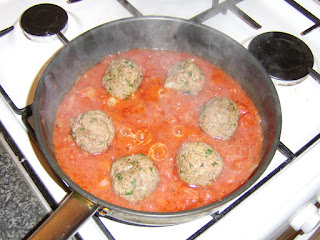
Albondigas basically means meatballs in Spanish. And they were introduced to latin america during the Spanish conquest. Naturally, there are many different Albondigas from Mexico to Colombia, and from Venezuela to Argentina. There are 2 popular Mexican versions of this dish. One in soup and one in tomato sauce. We will only post the recipe for the one in tomato sauce as we have not experimented with the one in soup yet.
Mexican-Style Albondigas
Ingredients For Meatballs:
- 500g frozen minced beef, thawed
- 500g frozen minced pork, thawed
- 1 1/2 cups plain breadcrumbs (the western, not japanese one)
- 2 eggs, beaten
- 1 teaspoon salt
- 2 teaspoons finely ground black pepper
- 3 cloves garlic, finely chopped
Ingredients For Sauce:
- 2 cans plain, canned tomatoes in juice (about 423g each)
- 1/2 cup pickled jalapeño peppers, drained
- 2 large white onions, finely chopped
- 5 cloves garlic, finely chopped
- 2 tablespoons vegetable oil plus extra for greasing
- 2 teaspoons cumin powder
- 2 cups hot water mixed with 2 tablespoons chicken stock powder (Knorr is the preferred brand)
- salt and black pepper to taste
Preheat the oven to its maximum. Line a baking tray with aluminium foil and lightly grease it with vegetable oil. In a large bowl, mix all the ingredients for the meatballs until mixture is well combined. Roll about 1 tablespoon worth of mixture into a ball and place onto baking tray. Continue with this process untill all the mixture has been used up. Make sure the meatballs are spaced well apart. Reduce heat to 180 deg celcius on 'top heat' mode and place meatballs in oven. Allow to grill for about 30 to 40 minutes or until the meatballs are cooked through and brown at the top. Meanwhile, pulse the canned tomatoes and jalapeños in a blender or food processor until well-blended. In a large, deep-dished pan, fry the onions and garlic in the vegetable oil under medium-low heat until onions are soft. Take care not to burn the garlic. Add cumin powder and fry for another few minutes until fragrant. Add the tomato mixture and water mixed with stock powder. Bring to the boil and mix well. Remove from heat, sample the sauce and add salt and pepper to taste. Set aside. When meatballs are cooked, remove from oven and transfer to a plate. Pour away all the liquid that has been 'excreted' onto the baking dish. Add meatballs slowly to the saucepan, taking care not to break them and bring back to the boil again, basting the meatballs in the sauce. Remove from heat and serve.
Albondigas basically means meatballs in Spanish. And they were introduced to latin america during the Spanish conquest. Naturally, there are many different Albondigas from Mexico to Colombia, and from Venezuela to Argentina. There are 2 popular Mexican versions of this dish. One in soup and one in tomato sauce. We will only post the recipe for the one in tomato sauce as we have not experimented with the one in soup yet.
Mexican-Style Albondigas
Ingredients For Meatballs:
- 500g frozen minced beef, thawed
- 500g frozen minced pork, thawed
- 1 1/2 cups plain breadcrumbs (the western, not japanese one)
- 2 eggs, beaten
- 1 teaspoon salt
- 2 teaspoons finely ground black pepper
- 3 cloves garlic, finely chopped
Ingredients For Sauce:
- 2 cans plain, canned tomatoes in juice (about 423g each)
- 1/2 cup pickled jalapeño peppers, drained
- 2 large white onions, finely chopped
- 5 cloves garlic, finely chopped
- 2 tablespoons vegetable oil plus extra for greasing
- 2 teaspoons cumin powder
- 2 cups hot water mixed with 2 tablespoons chicken stock powder (Knorr is the preferred brand)
- salt and black pepper to taste
Preheat the oven to its maximum. Line a baking tray with aluminium foil and lightly grease it with vegetable oil. In a large bowl, mix all the ingredients for the meatballs until mixture is well combined. Roll about 1 tablespoon worth of mixture into a ball and place onto baking tray. Continue with this process untill all the mixture has been used up. Make sure the meatballs are spaced well apart. Reduce heat to 180 deg celcius on 'top heat' mode and place meatballs in oven. Allow to grill for about 30 to 40 minutes or until the meatballs are cooked through and brown at the top. Meanwhile, pulse the canned tomatoes and jalapeños in a blender or food processor until well-blended. In a large, deep-dished pan, fry the onions and garlic in the vegetable oil under medium-low heat until onions are soft. Take care not to burn the garlic. Add cumin powder and fry for another few minutes until fragrant. Add the tomato mixture and water mixed with stock powder. Bring to the boil and mix well. Remove from heat, sample the sauce and add salt and pepper to taste. Set aside. When meatballs are cooked, remove from oven and transfer to a plate. Pour away all the liquid that has been 'excreted' onto the baking dish. Add meatballs slowly to the saucepan, taking care not to break them and bring back to the boil again, basting the meatballs in the sauce. Remove from heat and serve.
Food Focus: Pão de Queijo
Country Of Origin: Brazil
Pão de Queijo is a Brazilian cheese bun. Commonly eaten as breakfast or as a snack. It can be found in many Brazilian bakeries, although many Brazilians also love making it at home from pre-mixes. It goes best with a cup of hot coffee or tea. As it is almost impossible to find a Pão de Queijo pre-mix in Singapore, we decided to make it from scratch. Do note that although the recipe and steps are simple, the dough can be a little difficult to handle as it can be rather sticky.
Pão de Queijo
Ingredients:
- 500g tapioca flour
- 3 eggs, beaten
- 1 cup milk
- 3 tablespoons vegetable oil
- 1 cup ready-shredded or grated Parmesan or Romano cheese
- 1/2 teaspoon salt
Preheat oven to maximum. In a heavy-based, non-stick saucepan, bring milk, vegetable oil and salt to boil over medium heat. Take care not to burn the milk. Remove from heat and whisk in tapioca flour, bit by bit until it forms a smooth batter. Leave to cool while still in the pan. When batter has cooled, whisk in the beaten eggs, bit by bit until batter is smooth again. Add all the parmesan cheese and mix well with a wooden spoon. The dough at this point will usually be very sticky.
Line a baking tray with aluminium foil, lightly grease it with vegetable oil and set aside. Use 1 tablespoon to scoop a generous portion of dough and another tablespoon to help shape it into a circle (not very easy) and drop it onto the baking tray. Continue this process until all the dough has been used up. Make sure the cheese balls are decently spaced apart. Reduce oven heat to 180 deg celcius (on fan mode) and bake the cheese buns for around 30 minutes. Monitoring it every now and then to make sure it doesn't burn. To test for doneness, insert a toothpick or chopstick into the bun. It should come out clean. Allow to cool down a little before serving. It should be served warm, not piping hot.
Pão de Queijo is a Brazilian cheese bun. Commonly eaten as breakfast or as a snack. It can be found in many Brazilian bakeries, although many Brazilians also love making it at home from pre-mixes. It goes best with a cup of hot coffee or tea. As it is almost impossible to find a Pão de Queijo pre-mix in Singapore, we decided to make it from scratch. Do note that although the recipe and steps are simple, the dough can be a little difficult to handle as it can be rather sticky.
Pão de Queijo
Ingredients:
- 500g tapioca flour
- 3 eggs, beaten
- 1 cup milk
- 3 tablespoons vegetable oil
- 1 cup ready-shredded or grated Parmesan or Romano cheese
- 1/2 teaspoon salt
Preheat oven to maximum. In a heavy-based, non-stick saucepan, bring milk, vegetable oil and salt to boil over medium heat. Take care not to burn the milk. Remove from heat and whisk in tapioca flour, bit by bit until it forms a smooth batter. Leave to cool while still in the pan. When batter has cooled, whisk in the beaten eggs, bit by bit until batter is smooth again. Add all the parmesan cheese and mix well with a wooden spoon. The dough at this point will usually be very sticky.
Line a baking tray with aluminium foil, lightly grease it with vegetable oil and set aside. Use 1 tablespoon to scoop a generous portion of dough and another tablespoon to help shape it into a circle (not very easy) and drop it onto the baking tray. Continue this process until all the dough has been used up. Make sure the cheese balls are decently spaced apart. Reduce oven heat to 180 deg celcius (on fan mode) and bake the cheese buns for around 30 minutes. Monitoring it every now and then to make sure it doesn't burn. To test for doneness, insert a toothpick or chopstick into the bun. It should come out clean. Allow to cool down a little before serving. It should be served warm, not piping hot.
Friday, 3 February 2012
Food Focus: Moqueca Baiana
Country Of Origin: Brazil
There are 2 main types of Moqueca that exist in Brazil. Moqueca Capixaba which is a speciality of Espírito Santo in south-eastern Brazil. And Moqueca Baiana which is a traditional dish from the state of Bahia. Which is in north-east Brazil. Moqueca is a pink or sometimes orange coloured seafood stew that has a history of a few hundred years. Moqueca Capixaba is prepared in a more Native American way, with annatto seeds being used and containing no coconut milk. Moqueca Baiana displays more African influence, and is usually prepared with ingredients like dendê oil and coconut milk. This post here focuses on Moqueca Baiana as we have prepared it for a birthday function before. Here are a few recipes, simplified for your convenience.
Moqueca de Peixe (Fish Moqueca)
Ingredients:
- 2 tablespoon vegetable oil
- 2 green bell peppers (capsicums), finely sliced
- 2 large white onions, finely diced
- 5 cloves garlic, finely chopped
- 1 tin tomato paste (such as Hunt's or Contadina)
- 1 tablespoon chilli powder mixed with 4 tablespoons water to form a paste
- 1 cup coconut cream
- 1 cup hot water mixed with 2 fish or ikan bilis stock cubes (Knorr is the preferred brand)
- 1 tablespoon white vinegar or juice of 2 limes
- 750g to 1kg white flesh fish fillets (such as Red Snapper), cut into chunks
- 2 tablespoons melted palm margarine (such as Planta)
- salt to taste
Heat oil in a large, deep-dished pan. Fry the onions, garlic, bell peppers and tomato paste under medium heat until onions turn soft and tomato paste darkens. Add in hot stock, chilli paste and vinegar. Bring to the boil, stirring constantly. Add coconut cream and mix well and add fish. Bring mixture to the boil and turn heat back down to medium. Simmer until fish is cooked through. This takes about 5 minutes. Stir in melted Planta. Add salt to taste. Ladle stew over rice and serve hot.
Moqueca de Camarão (Shrimp/Prawn Moqueca)
Ingredients:
- 2 tablespoon vegetable oil
- 2 green bell peppers (capsicums), finely sliced
- 2 large white onions, finely diced
- 5 cloves garlic, finely chopped
- 1 tin tomato paste (such as Hunt's or Contadina)
- 1 tablespoon chilli powder mixed with 4 tablespoons water to form a paste
- 1 cup coconut cream
- 1 cup hot water mixed with 2 fish or ikan bilis stock cubes (Knorr is the preferred brand)
- 1 tablespoon white vinegar or juice of 2 limes
- 750g to 1kg frozen raw prawns. Must be raw. Thawed, peeled and deveined. Reserve its liquid after thawing
- 2 tablespoons melted palm margarine (such as Planta)
- salt to taste
Heat oil in a large, deep-dished pan. Fry the onions, garlic, bell peppers and tomato paste under medium heat until onions turn soft and tomato paste darkens. Add in hot stock and vinegar. Bring to the boil, stirring constantly. Add coconut cream, chilli paste and the reserved prawn liquid, mix well and add prawns. Bring mixture to the boil and turn heat back down to medium. Simmer until prawns are cooked through. This takes about 5 minutes. Stir in melted Planta. Add salt to taste. Ladle stew over rice and serve hot.
Moqueca de Mexilhão (Mussel Moqueca)
Ingredients:
- 2 tablespoon vegetable oil
- 2 green bell peppers (capsicums), finely sliced
- 2 large white onions, finely diced
- 5 cloves garlic, finely chopped
- 1 tin tomato paste (such as Hunt's or Contadina)
- 1 tablespoon chilli powder mixed with 4 tablespoons water to form a paste
- 1 cup coconut cream
- 1 cup hot water mixed with 2 fish or ikan bilis stock cubes (Knorr is the preferred brand)
- 1 tablespoon white vinegar or juice of 2 limes
- 1kg raw mussels, soaked and scrubbed
- 2 tablespoons melted palm margarine (such as Planta)
- salt to taste
In a large pot. Bring the stock to a rolling boil and pour in the mussels. Cover with a lid and allow to steam for a few minutes. Shaking the pot once or twice to turn the mussels. Allow the mussels to cook through before removing from heat. Drain and reserve the liquid. Heat oil in a large, deep-dished pan. Fry the onions, garlic, bell peppers and tomato paste under medium heat until onions turn soft and tomato paste darkens. Add in the reserved mussel liquid, chilli paste and vinegar. Bring to the boil, stirring constantly. Add coconut cream and mix well. Bring mixture to the boil and turn heat back down to medium. Add the cooked mussels and turn off the heat. Mix well and stir in melted Planta. Add salt to taste if still necessary. Ladle stew over rice and serve hot.
Moqueca de Caranguejo/Lagosta (Crab/Lobster Moqueca)
Ingredients:
- oil for pan frying
- 3 tablespoons plain flour
- 2 green bell peppers (capsicums), finely sliced
- 2 large white onions, finely diced
- 5 cloves garlic, finely chopped
- 1 tin tomato paste (such as Hunt's or Contadina)
- 1 tablespoon chilli powder mixed with 4 tablespoons water to form a paste
- 1 cup coconut cream
- 1 cup hot water mixed with 2 fish or ikan bilis stock cubes (Knorr is the preferred brand)
- 1 tablespoon white vinegar or juice of 2 limes
- 1 to 1.5kg of crab or lobster, cleaned, scrubbed, innards such as gills removed and cut into pieces
- 2 tablespoons melted palm margarine (such as Planta)
- salt to taste
Pat crab or lobster dry with a paper towel. Hit the shell with the flat side of a cleaver to crack the shells. Do not overcrack them as this will cause bits of shell to fall into the stew. Dust all over with flour, shaking off any excess. Heat oil in a wok or deep dish pan and pan-fry crab or lobster in batches. Preferable to use metal tongs. Pan fry till shell turns red. Remove crab or lobster from heat and set aside. Fry the onions, garlic, bell peppers and tomato paste under medium heat until onions turn soft and tomato paste darkens. Add in hot stock and, chilli paste and vinegar. Bring to the boil, stirring constantly. Add crab or lobster. Bring mixture to the boil and turn heat back down to medium. Simmer for 15 minutes or until crab or lobster is cooked through. Add in coconut cream and bring to the boil again. Remove from heat and stir in melted Planta. Add salt to taste. Ladle stew over rice and serve hot.
There are 2 main types of Moqueca that exist in Brazil. Moqueca Capixaba which is a speciality of Espírito Santo in south-eastern Brazil. And Moqueca Baiana which is a traditional dish from the state of Bahia. Which is in north-east Brazil. Moqueca is a pink or sometimes orange coloured seafood stew that has a history of a few hundred years. Moqueca Capixaba is prepared in a more Native American way, with annatto seeds being used and containing no coconut milk. Moqueca Baiana displays more African influence, and is usually prepared with ingredients like dendê oil and coconut milk. This post here focuses on Moqueca Baiana as we have prepared it for a birthday function before. Here are a few recipes, simplified for your convenience.
Moqueca de Peixe (Fish Moqueca)
Ingredients:
- 2 tablespoon vegetable oil
- 2 green bell peppers (capsicums), finely sliced
- 2 large white onions, finely diced
- 5 cloves garlic, finely chopped
- 1 tin tomato paste (such as Hunt's or Contadina)
- 1 tablespoon chilli powder mixed with 4 tablespoons water to form a paste
- 1 cup coconut cream
- 1 cup hot water mixed with 2 fish or ikan bilis stock cubes (Knorr is the preferred brand)
- 1 tablespoon white vinegar or juice of 2 limes
- 750g to 1kg white flesh fish fillets (such as Red Snapper), cut into chunks
- 2 tablespoons melted palm margarine (such as Planta)
- salt to taste
Heat oil in a large, deep-dished pan. Fry the onions, garlic, bell peppers and tomato paste under medium heat until onions turn soft and tomato paste darkens. Add in hot stock, chilli paste and vinegar. Bring to the boil, stirring constantly. Add coconut cream and mix well and add fish. Bring mixture to the boil and turn heat back down to medium. Simmer until fish is cooked through. This takes about 5 minutes. Stir in melted Planta. Add salt to taste. Ladle stew over rice and serve hot.
Moqueca de Camarão (Shrimp/Prawn Moqueca)
Ingredients:
- 2 tablespoon vegetable oil
- 2 green bell peppers (capsicums), finely sliced
- 2 large white onions, finely diced
- 5 cloves garlic, finely chopped
- 1 tin tomato paste (such as Hunt's or Contadina)
- 1 tablespoon chilli powder mixed with 4 tablespoons water to form a paste
- 1 cup coconut cream
- 1 cup hot water mixed with 2 fish or ikan bilis stock cubes (Knorr is the preferred brand)
- 1 tablespoon white vinegar or juice of 2 limes
- 750g to 1kg frozen raw prawns. Must be raw. Thawed, peeled and deveined. Reserve its liquid after thawing
- 2 tablespoons melted palm margarine (such as Planta)
- salt to taste
Heat oil in a large, deep-dished pan. Fry the onions, garlic, bell peppers and tomato paste under medium heat until onions turn soft and tomato paste darkens. Add in hot stock and vinegar. Bring to the boil, stirring constantly. Add coconut cream, chilli paste and the reserved prawn liquid, mix well and add prawns. Bring mixture to the boil and turn heat back down to medium. Simmer until prawns are cooked through. This takes about 5 minutes. Stir in melted Planta. Add salt to taste. Ladle stew over rice and serve hot.
Moqueca de Mexilhão (Mussel Moqueca)
Ingredients:
- 2 tablespoon vegetable oil
- 2 green bell peppers (capsicums), finely sliced
- 2 large white onions, finely diced
- 5 cloves garlic, finely chopped
- 1 tin tomato paste (such as Hunt's or Contadina)
- 1 tablespoon chilli powder mixed with 4 tablespoons water to form a paste
- 1 cup coconut cream
- 1 cup hot water mixed with 2 fish or ikan bilis stock cubes (Knorr is the preferred brand)
- 1 tablespoon white vinegar or juice of 2 limes
- 1kg raw mussels, soaked and scrubbed
- 2 tablespoons melted palm margarine (such as Planta)
- salt to taste
In a large pot. Bring the stock to a rolling boil and pour in the mussels. Cover with a lid and allow to steam for a few minutes. Shaking the pot once or twice to turn the mussels. Allow the mussels to cook through before removing from heat. Drain and reserve the liquid. Heat oil in a large, deep-dished pan. Fry the onions, garlic, bell peppers and tomato paste under medium heat until onions turn soft and tomato paste darkens. Add in the reserved mussel liquid, chilli paste and vinegar. Bring to the boil, stirring constantly. Add coconut cream and mix well. Bring mixture to the boil and turn heat back down to medium. Add the cooked mussels and turn off the heat. Mix well and stir in melted Planta. Add salt to taste if still necessary. Ladle stew over rice and serve hot.
Moqueca de Caranguejo/Lagosta (Crab/Lobster Moqueca)
Ingredients:
- oil for pan frying
- 3 tablespoons plain flour
- 2 green bell peppers (capsicums), finely sliced
- 2 large white onions, finely diced
- 5 cloves garlic, finely chopped
- 1 tin tomato paste (such as Hunt's or Contadina)
- 1 tablespoon chilli powder mixed with 4 tablespoons water to form a paste
- 1 cup coconut cream
- 1 cup hot water mixed with 2 fish or ikan bilis stock cubes (Knorr is the preferred brand)
- 1 tablespoon white vinegar or juice of 2 limes
- 1 to 1.5kg of crab or lobster, cleaned, scrubbed, innards such as gills removed and cut into pieces
- 2 tablespoons melted palm margarine (such as Planta)
- salt to taste
Pat crab or lobster dry with a paper towel. Hit the shell with the flat side of a cleaver to crack the shells. Do not overcrack them as this will cause bits of shell to fall into the stew. Dust all over with flour, shaking off any excess. Heat oil in a wok or deep dish pan and pan-fry crab or lobster in batches. Preferable to use metal tongs. Pan fry till shell turns red. Remove crab or lobster from heat and set aside. Fry the onions, garlic, bell peppers and tomato paste under medium heat until onions turn soft and tomato paste darkens. Add in hot stock and, chilli paste and vinegar. Bring to the boil, stirring constantly. Add crab or lobster. Bring mixture to the boil and turn heat back down to medium. Simmer for 15 minutes or until crab or lobster is cooked through. Add in coconut cream and bring to the boil again. Remove from heat and stir in melted Planta. Add salt to taste. Ladle stew over rice and serve hot.
Wednesday, 1 February 2012
Food Focus: Vatapá
Country Of Origin: Brazil
Vatapá is a thick seafood and coconut stew that originates from the state of Bahia, in north-eastern Brazil. Superbly filling, this dish has become extremely popular and commonly associated with other areas in northern Brazil too. In Bahia, Vatapá is usually eaten with Acarajé (a deep fried bean ball). Elsewhere in Brazil, it is usually eaten with white rice. Vatapá is not very well known in Singapore as most Brazilian restaurants here are Churrascarias, which is a speciality of southern Brazil. Vatapá on the other hand, hails from the north, where African influence is much stronger. Here are a few simple Vatapá recipes that one can try at home. They have been modified to fit the Singaporean kitchen. Each recipe serves 6 people.
Ingredients:
- 2 to 3 tablespoon vegetable oil
- 2 large white onions, chopped
- 5 cloves garlic, finely chopped
- 1/2 cup pickled jalapeño peppers, drained
- 1/2 cup chinese dried shrimps (hay bee), ground till fine in a blender, and pre fried in oil till golden and fragrant (remember to strain off all the oil after frying first)
- 1/2 cup creamy (not chunky) peanut butter
- 2 cups hot water mixed with 2 fish or ikan bilis stock cubes (Knorr is the preferred brand)
- 1 cup breadcrumbs (the western, not japanese type)
- 2 cups coconut cream
- 500g to 750g frozen raw prawns (shrimps). Thawed, peeled and deveined. Make sure they are raw
- black pepper to taste, salt to taste if you feel that the stew is still not salty enough from using stock cubes
- 3 tablespoons palm margarine such as Planta, melted in a microwave, cooled and mixed with 1/2 to 1 teaspoon yellow food colouring (do not omit this ingredient)
Place the onion, ground dried shrimps, garlic and jalapeño peppers in a food processor and pulse till smooth. Add a little water if necessary to keep the blades turning. Heat the vegetable oil in a large deep dish saucepan over medium heat. Add the onion-shrimp mixture and sauté until cooked through, about 5-7 minutes. Stir in the stock and peanut butter. Bring to the boil, stirring constantly until smooth. Stir in breadcrumbs and black pepper. Bring to a boil again, then reduce heat to medium-low and simmer for about 10 minutes. Add the shrimp and coconut cream. Let simmer for another 5 minutes or so, until shrimp is cooked through. But not overcooked. Remove from heat, stir in the planta and food colouring mixture. Taste the stew and add salt if still necessary. Serve hot.
Vatapá de Galinha (Chicken Vatapá)
Ingredients:
- 2 to 3 tablespoon vegetable oil
- 2 large white onions, chopped
- 5 cloves garlic, finely chopped
- 1/2 cup pickled jalapeño peppers, drained
- 1/2 cup chinese dried shrimps (hay bee), ground till fine in a blender, and pre fried in oil till golden and fragrant (remember to strain off all the oil after frying first)
- 1/2 cup creamy (not chunky) peanut butter
- 2 cups hot water mixed with 2 chicken stock cubes (Knorr is the preferred brand)
- 1 cup breadcrumbs (the western, not japanese type)
- 2 cups coconut cream
- 750g to 1kg frozen skinless chicken breast meat. Thawed, boiled and shredded.
- black pepper to taste, salt to taste if you feel that the stew is still not salty enough from using stock cubes
- 3 tablespoons palm margarine such as Planta, melted in a microwave, cooled and mixed with 1/2 to 1 teaspoon yellow food colouring (do not omit this ingredient)
Place the onion, ground dried shrimps, garlic and jalapeño peppers in a food processor and pulse till smooth. Add a little water if necessary to keep the blades turning. Heat the vegetable oil in a large deep dish saucepan over medium heat. Add the onion-shrimp mixture and sauté until cooked through, about 5-7 minutes. Stir in the stock and peanut butter. Bring to the boil, stirring constantly until smooth. Stir in breadcrumbs and black pepper. Bring to a boil again, then reduce heat to medium-low and simmer for about 10 minutes. Add the chicken and coconut cream. Let simmer for another 5 minutes or so, until shrimp is cooked through. But not overcooked. Remove from heat, stir in the planta and food colouring mixture. Taste the stew and add salt if still necessary. Serve hot.
Vatapá de Peixe (Fish Vatapá)
Ingredients:
- 2 to 3 tablespoon vegetable oil
- 2 large white onions, chopped
- 5 cloves garlic, finely chopped
- 1/2 cup pickled jalapeño peppers, drained
- 1/2 cup chinese dried shrimps (hay bee), ground till fine in a blender, and pre fried in oil till golden and fragrant (remember to strain off all the oil after frying first)
- 1/2 cup creamy (not chunky) peanut butter
- 2 cups hot water mixed with 2 fish or ikan bilis stock cubes (Knorr is the preferred brand)
- 1 cup breadcrumbs (the western, not japanese type)
- 2 cups coconut cream
- 750g to 1kg firm white-fleshed fish fillets (such as red snapper), cut into chunks
- black pepper to taste, salt to taste if you feel that the stew is still not salty enough from using stock cubes
- 3 tablespoons palm margarine such as Planta, melted in a microwave, cooled and mixed with 1/2 to 1 teaspoon yellow food colouring (do not omit this ingredient)
Place the onion, ground dried shrimps, garlic and jalapeño peppers in a food processor and pulse till smooth. Add a little water if necessary to keep the blades turning. Heat the vegetable oil in a large deep dish saucepan over medium heat. Add the onion-shrimp mixture and sauté until cooked through, about 5-7 minutes. Stir in the stock and peanut butter. Bring to the boil, stirring constantly until smooth. Stir in breadcrumbs and black pepper. Bring to a boil again, then reduce heat to medium-low and simmer for about 10 minutes. Add the fish and coconut cream. Let simmer for another 5 minutes or so, until shrimp is cooked through. But not overcooked. Remove from heat, stir in the planta and food colouring mixture. Taste the stew and add salt if still necessary. Serve hot.
* important note: The reason why Planta with food colouring is so important is because any authentic Vatapá will contain Dendê oil. A type of palm oil that originates in Africa. It has an extremely strong taste and stains any neutral coloured food yellow. Dendê oil is very common in north and north-eastern Brazilian cooking but is almost impossible to get in Singapore. Hence, we chose Planta as it is stronger in taste and smell than our local palm oil. And yellow food colouring as it will give the dish its desired colour. Do not be fooled by the deep yellow sheen in plain, melted Planta. The yellow colour from it is not strong enough to colour the stew.
Vatapá is a thick seafood and coconut stew that originates from the state of Bahia, in north-eastern Brazil. Superbly filling, this dish has become extremely popular and commonly associated with other areas in northern Brazil too. In Bahia, Vatapá is usually eaten with Acarajé (a deep fried bean ball). Elsewhere in Brazil, it is usually eaten with white rice. Vatapá is not very well known in Singapore as most Brazilian restaurants here are Churrascarias, which is a speciality of southern Brazil. Vatapá on the other hand, hails from the north, where African influence is much stronger. Here are a few simple Vatapá recipes that one can try at home. They have been modified to fit the Singaporean kitchen. Each recipe serves 6 people.
Ingredients:
- 2 to 3 tablespoon vegetable oil
- 2 large white onions, chopped
- 5 cloves garlic, finely chopped
- 1/2 cup pickled jalapeño peppers, drained
- 1/2 cup chinese dried shrimps (hay bee), ground till fine in a blender, and pre fried in oil till golden and fragrant (remember to strain off all the oil after frying first)
- 1/2 cup creamy (not chunky) peanut butter
- 2 cups hot water mixed with 2 fish or ikan bilis stock cubes (Knorr is the preferred brand)
- 1 cup breadcrumbs (the western, not japanese type)
- 2 cups coconut cream
- 500g to 750g frozen raw prawns (shrimps). Thawed, peeled and deveined. Make sure they are raw
- black pepper to taste, salt to taste if you feel that the stew is still not salty enough from using stock cubes
- 3 tablespoons palm margarine such as Planta, melted in a microwave, cooled and mixed with 1/2 to 1 teaspoon yellow food colouring (do not omit this ingredient)
Place the onion, ground dried shrimps, garlic and jalapeño peppers in a food processor and pulse till smooth. Add a little water if necessary to keep the blades turning. Heat the vegetable oil in a large deep dish saucepan over medium heat. Add the onion-shrimp mixture and sauté until cooked through, about 5-7 minutes. Stir in the stock and peanut butter. Bring to the boil, stirring constantly until smooth. Stir in breadcrumbs and black pepper. Bring to a boil again, then reduce heat to medium-low and simmer for about 10 minutes. Add the shrimp and coconut cream. Let simmer for another 5 minutes or so, until shrimp is cooked through. But not overcooked. Remove from heat, stir in the planta and food colouring mixture. Taste the stew and add salt if still necessary. Serve hot.
Vatapá de Galinha (Chicken Vatapá)
Ingredients:
- 2 to 3 tablespoon vegetable oil
- 2 large white onions, chopped
- 5 cloves garlic, finely chopped
- 1/2 cup pickled jalapeño peppers, drained
- 1/2 cup chinese dried shrimps (hay bee), ground till fine in a blender, and pre fried in oil till golden and fragrant (remember to strain off all the oil after frying first)
- 1/2 cup creamy (not chunky) peanut butter
- 2 cups hot water mixed with 2 chicken stock cubes (Knorr is the preferred brand)
- 1 cup breadcrumbs (the western, not japanese type)
- 2 cups coconut cream
- 750g to 1kg frozen skinless chicken breast meat. Thawed, boiled and shredded.
- black pepper to taste, salt to taste if you feel that the stew is still not salty enough from using stock cubes
- 3 tablespoons palm margarine such as Planta, melted in a microwave, cooled and mixed with 1/2 to 1 teaspoon yellow food colouring (do not omit this ingredient)
Place the onion, ground dried shrimps, garlic and jalapeño peppers in a food processor and pulse till smooth. Add a little water if necessary to keep the blades turning. Heat the vegetable oil in a large deep dish saucepan over medium heat. Add the onion-shrimp mixture and sauté until cooked through, about 5-7 minutes. Stir in the stock and peanut butter. Bring to the boil, stirring constantly until smooth. Stir in breadcrumbs and black pepper. Bring to a boil again, then reduce heat to medium-low and simmer for about 10 minutes. Add the chicken and coconut cream. Let simmer for another 5 minutes or so, until shrimp is cooked through. But not overcooked. Remove from heat, stir in the planta and food colouring mixture. Taste the stew and add salt if still necessary. Serve hot.
Vatapá de Peixe (Fish Vatapá)
Ingredients:
- 2 to 3 tablespoon vegetable oil
- 2 large white onions, chopped
- 5 cloves garlic, finely chopped
- 1/2 cup pickled jalapeño peppers, drained
- 1/2 cup chinese dried shrimps (hay bee), ground till fine in a blender, and pre fried in oil till golden and fragrant (remember to strain off all the oil after frying first)
- 1/2 cup creamy (not chunky) peanut butter
- 2 cups hot water mixed with 2 fish or ikan bilis stock cubes (Knorr is the preferred brand)
- 1 cup breadcrumbs (the western, not japanese type)
- 2 cups coconut cream
- 750g to 1kg firm white-fleshed fish fillets (such as red snapper), cut into chunks
- black pepper to taste, salt to taste if you feel that the stew is still not salty enough from using stock cubes
- 3 tablespoons palm margarine such as Planta, melted in a microwave, cooled and mixed with 1/2 to 1 teaspoon yellow food colouring (do not omit this ingredient)
Place the onion, ground dried shrimps, garlic and jalapeño peppers in a food processor and pulse till smooth. Add a little water if necessary to keep the blades turning. Heat the vegetable oil in a large deep dish saucepan over medium heat. Add the onion-shrimp mixture and sauté until cooked through, about 5-7 minutes. Stir in the stock and peanut butter. Bring to the boil, stirring constantly until smooth. Stir in breadcrumbs and black pepper. Bring to a boil again, then reduce heat to medium-low and simmer for about 10 minutes. Add the fish and coconut cream. Let simmer for another 5 minutes or so, until shrimp is cooked through. But not overcooked. Remove from heat, stir in the planta and food colouring mixture. Taste the stew and add salt if still necessary. Serve hot.
* important note: The reason why Planta with food colouring is so important is because any authentic Vatapá will contain Dendê oil. A type of palm oil that originates in Africa. It has an extremely strong taste and stains any neutral coloured food yellow. Dendê oil is very common in north and north-eastern Brazilian cooking but is almost impossible to get in Singapore. Hence, we chose Planta as it is stronger in taste and smell than our local palm oil. And yellow food colouring as it will give the dish its desired colour. Do not be fooled by the deep yellow sheen in plain, melted Planta. The yellow colour from it is not strong enough to colour the stew.
Food Focus: Salsa Verde & Salsa Roja
Country Of Origin: Mexico
Salsa Verde (green salsa) and Salsa Roja (red salsa) are the 2 most common types of commercial salsas found outside Mexico. They are extremely versatile and can be eaten with many types of food such as tacos, nachos, burritos and fajitas. However, they can be rather pricey when bought from stores, especially when one likes to consume them in large quantities. Frankly, it is not extremely difficult to make at home. And it is much cheaper. Which is why we are providing you with these tried and tested recipes.
Ingredients:
- 7 tomatoes, insides scooped out into a separate bowl (for the green salsa), roughly chopped
- 1 big white onion, roughly chopped
- 5 cloves garlic, roughly chopped
- 1 small tin tomato paste (like Hunt's or Contadina)
- 2 tbsp vegetable oil
- 4 local green chillies, sliced (use the seeds too)
- 1 cup water
- 1 teaspoon salt
Heat the oil in a non-stick, deep dish pan. Add in the tomato paste, onions, garlic and chillies. Fry under medium heat until tomato paste starts to change to a darker colour. Add in the chopped tomatoes and fry under high heat until tomatoes soften. Add in the water and bring to a boil. Mix well and cover the mixture. Lower down to low-medium heat and allow to simmer for 10-15 minutes. Stirring every now and then to prevent any burning. Remove the lid and off the heat. Allow the mixture to cool, stirring constantly. Ladle the mixture into a blender and pulse under its lowest setting until the sauce turns smooth (about 2 mins). Pour into a clean glass jar and allow to cool before refrigerating it. Keeps well for a week to a week and a half.
Salsa Verde is usually a challenge to make at home as it is quite difficult to find tomatillos (the original fruit used for green salsa) and green tomatoes (the first choice subsitute) in Singapore. So we have devised a recipe that produces a salsa that matches the taste and texture of the original Salsa Verde.
Ingredients:
- 5 green bell peppers (capsicums), seeds removed and roughly chopped
- 1 big white onion, roughly chopped
- 5 cloves garlic, roughly chopped
- 1 bunch parsley (about 50g), roughly chopped
- the insides of the 7 tomatoes used in Salsa Roja
- 1 cup white vinegar
- 1 teaspoon salt
Heat the oil in a non-stick, deep dish pan. Add onions and garlic to the pan and fry until onions turn soft. Add the peppers, parsley and tomato insides. Fry on high heat until peppers turn soft. Add the vinegar and bring to a boil. Mix well and cover the mixture. Lower down to low-medium heat and allow to simmer for 10-15 minutes. Stirring every now and then to prevent any burning. Remove the lid and off the heat. Allow the mixture to cool, stirring constantly. Ladle the mixture into a blender and pulse under its lowest setting until the sauce turns smooth (about 2 mins). Pour into a clean glass jar and allow to cool before refrigerating it. Keeps well for a week to a week and a half.
Salsa Verde (green salsa) and Salsa Roja (red salsa) are the 2 most common types of commercial salsas found outside Mexico. They are extremely versatile and can be eaten with many types of food such as tacos, nachos, burritos and fajitas. However, they can be rather pricey when bought from stores, especially when one likes to consume them in large quantities. Frankly, it is not extremely difficult to make at home. And it is much cheaper. Which is why we are providing you with these tried and tested recipes.
Salsa Roja (red salsa)
Ingredients:
- 7 tomatoes, insides scooped out into a separate bowl (for the green salsa), roughly chopped
- 1 big white onion, roughly chopped
- 5 cloves garlic, roughly chopped
- 1 small tin tomato paste (like Hunt's or Contadina)
- 2 tbsp vegetable oil
- 4 local green chillies, sliced (use the seeds too)
- 1 cup water
- 1 teaspoon salt
Heat the oil in a non-stick, deep dish pan. Add in the tomato paste, onions, garlic and chillies. Fry under medium heat until tomato paste starts to change to a darker colour. Add in the chopped tomatoes and fry under high heat until tomatoes soften. Add in the water and bring to a boil. Mix well and cover the mixture. Lower down to low-medium heat and allow to simmer for 10-15 minutes. Stirring every now and then to prevent any burning. Remove the lid and off the heat. Allow the mixture to cool, stirring constantly. Ladle the mixture into a blender and pulse under its lowest setting until the sauce turns smooth (about 2 mins). Pour into a clean glass jar and allow to cool before refrigerating it. Keeps well for a week to a week and a half.
Salsa Verde (green salsa)
Salsa Verde is usually a challenge to make at home as it is quite difficult to find tomatillos (the original fruit used for green salsa) and green tomatoes (the first choice subsitute) in Singapore. So we have devised a recipe that produces a salsa that matches the taste and texture of the original Salsa Verde.
Ingredients:
- 5 green bell peppers (capsicums), seeds removed and roughly chopped
- 1 big white onion, roughly chopped
- 5 cloves garlic, roughly chopped
- 1 bunch parsley (about 50g), roughly chopped
- the insides of the 7 tomatoes used in Salsa Roja
- 1 cup white vinegar
- 1 teaspoon salt
Heat the oil in a non-stick, deep dish pan. Add onions and garlic to the pan and fry until onions turn soft. Add the peppers, parsley and tomato insides. Fry on high heat until peppers turn soft. Add the vinegar and bring to a boil. Mix well and cover the mixture. Lower down to low-medium heat and allow to simmer for 10-15 minutes. Stirring every now and then to prevent any burning. Remove the lid and off the heat. Allow the mixture to cool, stirring constantly. Ladle the mixture into a blender and pulse under its lowest setting until the sauce turns smooth (about 2 mins). Pour into a clean glass jar and allow to cool before refrigerating it. Keeps well for a week to a week and a half.
Subscribe to:
Posts (Atom)